Biochar carbon removal only holds up if the feedstock behind it is real, traceable and consistent. In July 2026 the ENKOP team travelled to Mwea to inspect both ends of that chain for our partner Pure Plant Organics.
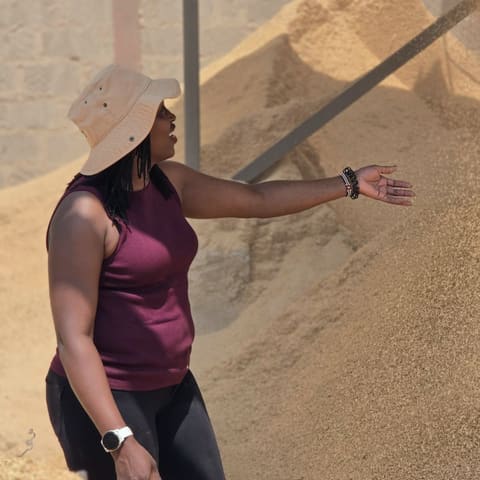
Lucy Nyoike and Zecharia Mwangi of ENKOP with rice husk at a stockpile.Mwea,
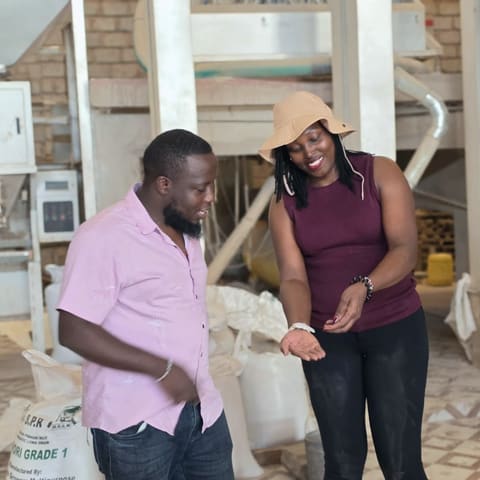
At MGM Rice Mill we reviewed processing throughput and inspected the milled grain that determines husk volume and quality. At the Pure Plant Organics site we walked through the production equipment with their technical team and examined how feedstock is stored and handled before conversion.
Inspecting milled grain at MGM Rice Mill. Grain quality sets the volume and consistency of the husk.Mwea,
Rice husk at MGM Rice Mill. The feedstock base for biochar carbon removal.Mwea, Reviewing samples at the workbench with partner technical staff.Mwea,
This is the work that sits underneath a credible carbon credit. Not a signed memorandum, but a physical chain of custody that a registry auditor can follow from mill floor to finished product.
What we inspected
3 of 9 stages inspected
Inspected means seen on site by the ENKOP team. It is not third-party verification. Stages without evidence are listed as not yet documented, not left out.